
Master the ten essential Capoeira moves every beginner needs. Learn detailed step-by-step technique, progressions, drills (solo & partner), timing with music, common mistakes, FAQs, and a weekly plan designed for young New Zealanders entering the roda with confidence.
Introduction: The First Toolbox You Bring Into the Roda
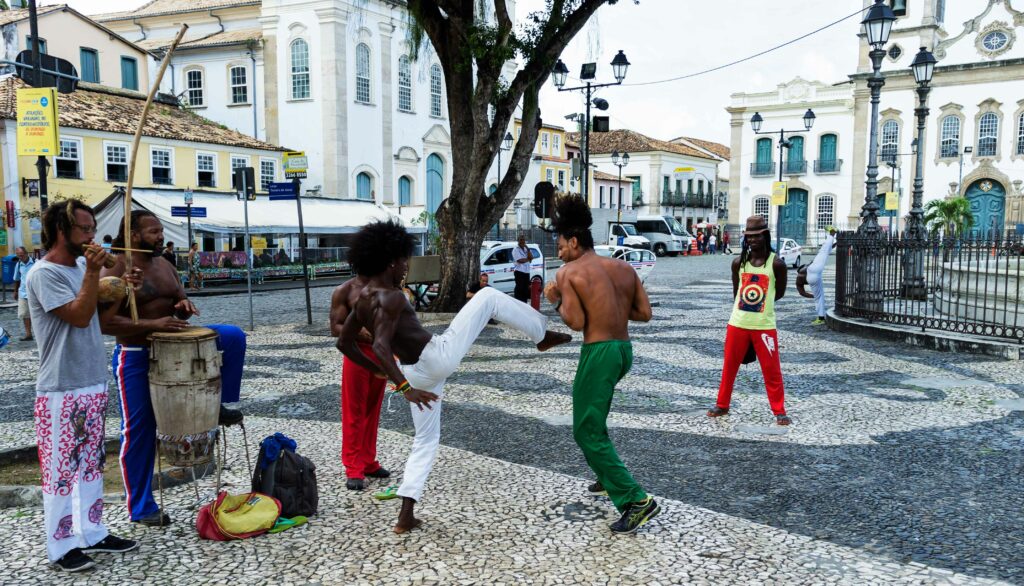
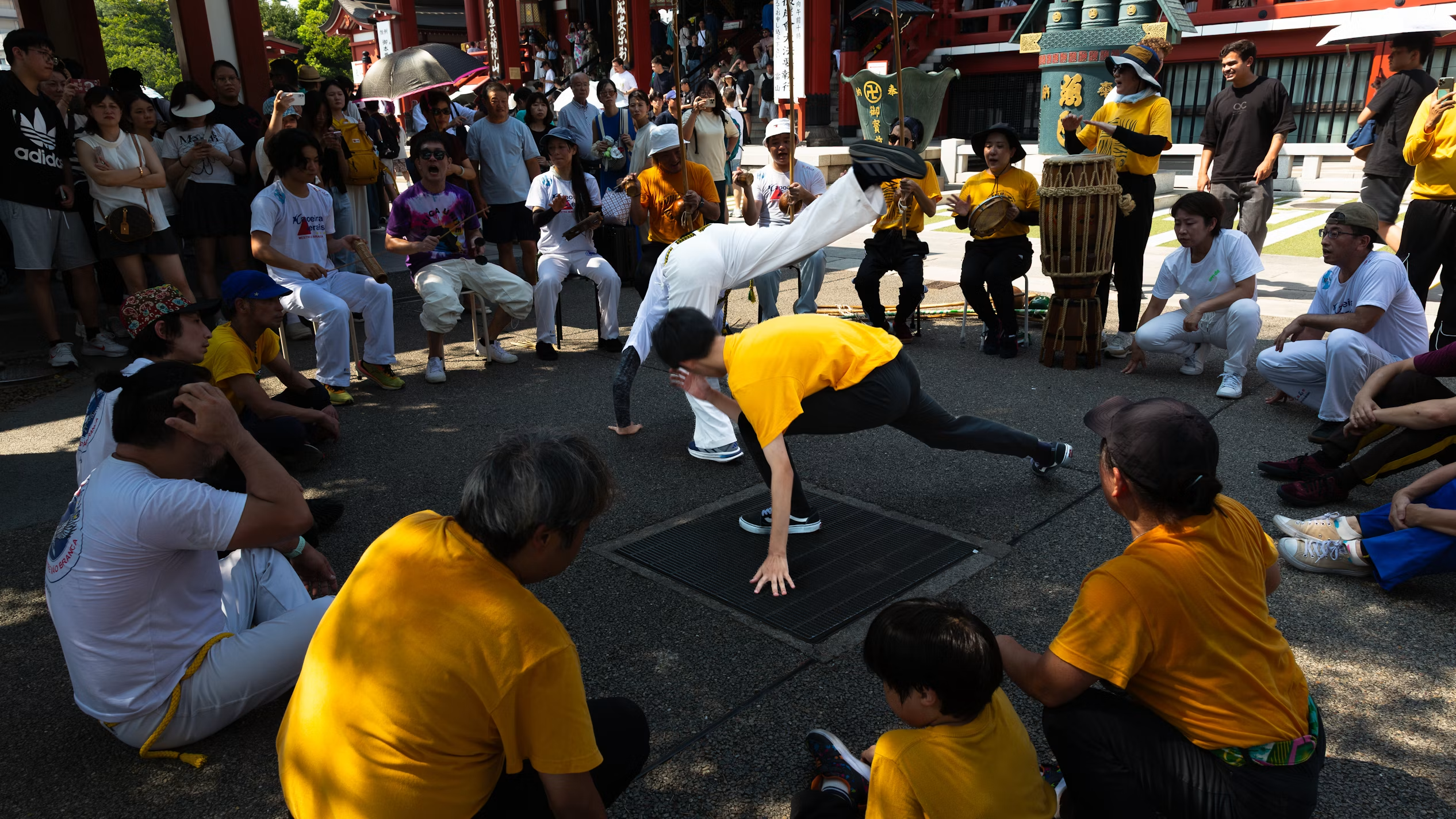
Picture this: a Saturday afternoon roda in Auckland. The atabaque sets a heartbeat, the berimbau calls, voices answer in chorus. Someone claps you in. You step forward—and your body has to “speak” Capoeira. In that moment, ten fundamental moves become your vocabulary. They let you move safely, communicate playfully, and keep the game flowing.
Capoeira is a dialogue, not a duel. Instead of blocking, you evade. Instead of rushing, you listen—to the rhythm, to your partner, to your own breath. These ten movements are taught first in most schools because they build rhythm, coordination, and awareness. They are also friendly to small spaces (great for home practice), which helps a lot if you’re training in Wellington flats or Dunedin dorms.
This guide goes beyond naming moves. You’ll find mechanics, coaching cues, step-by-steps, progressions, drills, safety notes, and timing tips with music. By the end, you’ll have a practical plan to train in class and at home—so the next time the berimbau sings, you’ll be ready.
Why These 10 Moves Are the Foundation
Capoeira has hundreds of variations, but beginners need a stable base before trying flips. These ten were chosen because they:
- Appear in nearly every roda, regardless of style (Angola, Regional, Contemporânea).
- Teach the three pillars: attack, evasion, and flow.
- Scale safely from slow to fast tempos (Angola → Benguela → São Bento Grande).
- Develop functional athleticism: balance, mobility, coordination, reactive timing.
- Fit New Zealand realities: mixed levels in the same class, limited home space, and varied sports backgrounds (rugby, netball, basketball, dance).
Treat them like the alphabet. Once you can “spell” with these letters, your sentences (games) get interesting, expressive, and safe.
Move #1: Ginga — The Swing That Never Stops
What it is: Capoeira’s continuous swaying step. The ginga is posture, rhythm, and readiness all at once. Without it, every other move feels isolated.
Biomechanics & cues:
- Feet wider than hips; knees soft; heels light.
- Step diagonally back, torso slightly forward as if surfing.
- Hands alive (never dangling), one near the face for guard.
- Breathe on the sway; let your head and hips “ride” the rhythm.
Step-by-step:
- From neutral, step your right foot back diagonally, toes angled out.
- Weight shifts to the back leg; front knee stays soft.
- Arms swing naturally—front hand loosely guards, rear hand balances.
- Return to center, then repeat left side. Keep the loop smooth.
Progressions:
- Tempo ladder: 60→80→100 BPM with a metronome or toque recording.
- Mirror ginga: face a partner; you lead, they copy. Switch roles.
- Ginga + check: pause for a micro-beat to test control, then resume.
Common mistakes (fixes):
- Freezing: set a “no stop” timer (2–5 min).
- Flat arms: imagine brushing water; keep them elastic.
- Tall posture: soften knees and hinge slightly at hips.
Move #2: Esquiva — The Art of Not Being Hit
What it is: Evasion. Capoeira avoids hard blocks; you “talk your way out” of danger.
Key variations & usage:
- Esquiva lateral: side lean away from the line of attack; hand shields face.
- Esquiva baixa: low squat-like sink; free hand posts lightly on floor.
- Esquiva diagonal: diagonal hinge, head off center, eyes on your partner.
Step-by-step (lateral):
- From ginga, slide hips off the attack line.
- Front hand frames your cheekbone; rear hand balances.
- Keep heels heavy; spine long; eyes tracking the kicker.
- Recover to ginga without turning your back.
Progressions & drills:
- Shadow dodges: call imaginary kicks; respond with the right esquiva.
- Partner feed: partner “shows” slow kicks; you dodge on the beat.
- Esquiva chains: lateral → baixa → diagonal → back to ginga.
Mistakes (fixes):
- Collapsing chest: think “long spine,” hinge from hips.
- Late reaction: start earlier; you can always adjust mid-dodge.
- Static finish: flow back to ginga to stay unpredictable.
Move #3: Meia Lua de Frente — Front Crescent Kick
What it is: A controlled inside-to-outside crescent. It teaches arc shape, balance, and re-centering.
Mechanics & cues:
- Kick from the hip, not the lower back.
- Draw a clean half-moon with your foot; toes relaxed, ankle organized.
- Keep your guard hand near your cheek; don’t “open your chest.”
Step-by-step:
- From ginga, anchor through the support foot.
- Swing the working leg across the body in an arc (inside→outside).
- Exhale on the arc; keep eyes on the target line.
- Re-plant softly; resume ginga immediately.
Drills:
- Arc tracing: place two cones; “paint” between them with your foot.
- Tempo reps: 3×10 per side at slow, medium, fast toques.
- Ginga-meia-ginga: 30–60 seconds continuous.
Mistakes (fixes):
- Over-rotation: aim to finish facing forward; “cap” the arc.
- Floppy core: zip ribs down; imagine a belt tightening lightly.
Move #4: Queixada — Reverse Crescent Kick
What it is: Outside-to-inside crescent. Feels like the “mirror twin” of meia lua de frente.
Step-by-step:
- From ginga, take a small cross step to load the hip.
- Sweep the leg wide (outside→inside), chest tall, guard up.
- Land under control; flow back into ginga.
Training ideas:
- Low-to-high ladder: knee-height arcs → waist → chest, preserving form.
- Queixada + esquiva: kick, then immediately dodge the hypothetical counter.
- Mirror drill: partners kick in sync to learn spacing safely.
Common errors:
- Dropping the guard: keep one hand “on camera.”
- Throwing from the spine: cue “hip draws the circle.”
Move #5: Martelo — The Hammer (Snapping Roundhouse)
What it is: A quick, direct, horizontal snap; excellent for learning speed and recoil.
Coaching cues:
- Knee drives first, foot follows.
- Strike with the instep or ball of the foot (as taught by your group).
- Recoil like a rubber band; don’t leave the leg hanging.
Step-by-step:
- Lift the knee to hip level with the foot tucked.
- Snap across the target line; exhale sharply.
- Return the foot beside the support leg; re-enter ginga.
Drills:
- Wall-line balance: hand on wall, 20 slow raises per side.
- Pad work: light taps on a pad to learn range and control.
- Martelo-negativa: kick → drop low to exit the line.
Fixes:
- Wind-up: eliminate back-swing; fast out, fast back.
- Wobbly base: build calf/foot strength; grip the floor.
Move #6: Armada — Spinning Crescent
What it is: A turning crescent that marries rotation, timing, and deception.
Mechanics:
- Pivot through the big toe of the support foot.
- Spot a point on the wall until the last moment.
- Keep the arc high and smooth; finish balanced.
Step-by-step:
- From ginga, pre-turn the shoulders slightly.
- Pivot, then whip the back leg in a crescent arc.
- Land facing in; re-compose your guard immediately.
Progressions:
- Pivot only: 10 clean turns per side.
- Half-height armada: arc at knee height to groove timing.
- Armada + esquiva: spin, land, dodge the imagined counter.
Mistakes:
- Dizziness: train in sets with pauses; spot longer.
- Throwing the head: lead with hips and torso, not the crown.
Move #7: Aú — Capoeira’s Cartwheel
What it is: A versatile inversion used to move, bait, or escape while keeping the game playful.
Safety & setup:
- Hands shoulder-width; fingers spread.
- Stack shoulder over wrist; avoid dumping weight forward.
- Soft knees on landing; eyes available for tracking.
Step-by-step:
- From ginga, place the near hand, then the far hand on the floor.
- Kick legs in a controlled scissor, not a flail.
- Land through the balls of the feet; return to ginga ready to react.
Variations:
- Aú baixo: low, stealthy arc close to the floor.
- Aú fechado: tucked knees for tight spaces.
- Aú sem mão (later): advanced, hands-free; don’t rush.
Drills:
- Line walks: aú along a line on the floor (tape or seam).
- Aú—negativa flow: invert and slide to the ground with control.
- Photo-hold: pause mid-aú for one beat to train stability.
Move #8: Negativa — The Low Escape & Hub of Transitions
What it is: Grounded evasion that doubles as a transition hub into sweeps, spins, or stands.
Form notes:
- Front leg extended, back leg bent, hip near heel.
- Posting hand light; chest facing the partner.
- From here, you can rotate, sweep, or spring up.
Step-by-step:
- Slide down from ginga with the front leg forward.
- Place the same-side hand near the hip for balance.
- Keep the opposite hand free to frame or feint.
- Transition either to a rasteira or roll back up to base.
Progressions:
- Static holds: 3×20s per side to build joint familiarity.
- Negativa turns: spin through to the other side without standing.
- Pop-ups: stand lightly back into ginga without using the hands.
Move #9: Rasteira — The Sweep (Your First Takedown)
What it is: A timing-based leg hook that topples your partner without force.
Principles:
- Catch the support foot, not the kicking leg.
- Keep chest low; pull with your body, not just the foot.
- Always help your partner back up—Capoeira is community.
Step-by-step:
- From esquiva/negativa, thread your foot behind the opponent’s base.
- Hook the heel; rotate your hips as if opening a door.
- Pull and guide, creating a gentle “tilt” of their center of mass.
Drills:
- Broom drill: sweep a stick along the floor in an arc for feel.
- Partner statue: partner stands tall; you practice placement at 10% speed.
- Counter-ready: after the sweep, step back to avoid collisions.
Mistakes:
- Kicking the ankle: think “hook & guide,” not strike.
- Upright torso: get low; leverage lives near the floor.
Move #10: Meia Lua de Compasso — The Compass Kick
What it is: Capoeira’s signature. Hands on the floor, leg swings in a powerful arc generated from the hips.
Safety & body organization:
- Hinge at the hips; don’t round the back.
- Hands (or one hand, depending on style) plant firmly.
- Gaze down-and-back; peek last second toward the target line.
Step-by-step:
- From ginga, fold at the hip and place the lead hand(s).
- Sweep the back leg in a circular path, drawing a wide compass.
- Exhale as the leg passes through the power zone; finish balanced.
Progressions:
- Quarter circles: practice smaller arcs first.
- Low compasso: keep the leg below hip height to learn control.
- Compasso to negativa: add a safe exit to avoid collisions.
Frequent faults (fixes):
- Hyper-arching: think “long spine,” not “banana back.”
- Wild leg: move the leg like a door on a hinge, not a whip with no base.
How to Connect the Moves (Flow, Not Pieces)
Simple combos (solo):
- Ginga → esquiva lateral → meia lua de frente → ginga.
- Ginga → queixada → negativa → stand → ginga.
- Ginga → martelo → esquiva baixa → aú baixo → ginga.
- Ginga → armada → negativa → rasteira (shadow) → ginga.
- Ginga → meia lua de compasso → step out → ginga.
Partner flow ideas (slow):
- Partner feeds a soft meia lua; you esquiva lateral → answer with queixada.
- Partner shows martelo; you esquiva baixa → aú to angle change.
- Partner turns armada; you step off-line → set a gentle rasteira (no force).
Music integration:
- Angola toque: play lower—more esquiva, negativa, rasteira.
- Benguela: smooth tempo—build sequences, explore angles.
- São Bento Grande: faster—shorter arcs, quicker recoils, tighter exits.
Weekly Training Plan (Beginner → Confident Player)
Day 1 — Foundations & Rhythm (45–60 min)
- Joint prep (wrists/hips/ankles) 6–8 min
- Ginga ladders 10 min (tempo changes)
- Esquivas circuit 12 min (lateral, baixa, diagonal)
- Meia lua de frente + queixada technique 12 min
- 3 mini-combos + cooldown 10–15 min
- Music add-on: clapping + 1 chorus for 5 min
Day 2 — Kicks & Evasions (45–60 min)
- Warm-up + footwork 8 min
- Martelo progressions 10 min
- Armada pivots + kicks 10–12 min
- Aú basics 10 min
- Ginga-kick-esquiva chains 10–15 min
- Music add-on: pandeiro basics 5 min
Day 3 — Ground & Signature (45–60 min)
- Mobility (hips/hamstrings/shoulders) 8–10 min
- Negativa holds & turns 10 min
- Rasteira placement 8–10 min
- Meia lua de compasso progressions 12–15 min
- Flow circuits (low game) 10–12 min
- Music add-on: listen to toques; identify tempo changes
Day 4 — Flow Day (40–50 min)
- Review all ten moves lightly 10 min
- Combo mapping (pick 4, repeat) 15–20 min
- Mini-roda or shadow games 10–15 min
- Reflection & notes 3–5 min (what to adjust next week)
NZ tip: if you play rugby/netball, use Day 3 to decompress joints; Capoeira’s low game balances field-sport loads.
Home Practice (Small Space, Big Wins)
15-minute micro-session:
- 3 min ginga (metronome or toque track)
- 4 min kicks: 8 reps per side each (meia lua de frente, queixada, martelo)
- 4 min ground: negativa flows + low aú transitions
- 4 min compass kick progressions + cooldown
Conditioning finisher (optional, 2 rounds):
- 20s handstand line (wall) → 20s rest
- 10 slow squats with hip openers
- 8 aús (controlled)
- 30s plank + shoulder taps
Mobility must-dos:
- Hip 90/90 transitions, hamstring pulses, wrist circles, thoracic rotations.
- Keep stretches active before class, static after.
Common Mistakes Across All Ten (and How to Fix Them)
- Practicing moves as isolated tricks
- Fix: always return to ginga; chain at least two actions.
- Forgetting to breathe
- Fix: exhale on effort (kick arc, sweep, spin).
- Chasing height over control
- Fix: master low arcs first; power shows up later.
- Ignoring the music
- Fix: train to recordings; change tempo mid-drill.
- Skipping recovery and joint prep
- Fix: 6–8 minutes at the start beats weeks off with soreness.
- No defensive habit
- Fix: pair every kick with a dodge or exit.
Mini Case Studies (How the Moves Help Real Beginners)
- A shy 15-year-old in Christchurch starts with clapping and ginga. Within three weeks, they’re chaining ginga → esquiva → meia lua de frente and volunteering to sing the chorus. Confidence climbs because the structure is clear and progress is visible.
- A rugby winger in Hamilton uses martelo and queixada drills to sharpen hip snap and balance. Lateral esquivas improve his sidestep on the field; coaches notice better body control.
- A Dunedin uni student with a small studio practices aú baixo and negativa flows nightly. After a month, they handle low games without knee discomfort and feel calmer during fast toques.
Extended FAQ (Beginner-Focused, NZ Context)
1) How many classes per week are optimal at the start?
Two is a great baseline. Add one short home session to accelerate coordination and rhythm.
2) Do I need special shoes or can I train barefoot?
Most Capoeira is barefoot, but some studios allow minimalist shoes on cold floors. Ask your teacher.
3) What if I have tight hamstrings?
Start with low arcs and active mobility. Aú baixo, negative flows, and slow kicks are joint-friendly.
4) How soon can I play in a roda?
Usually within a few weeks. You’ll start with short, slow games under guidance.
5) Are takedowns safe for beginners?
Yes, if taught with control. Rasteira practice begins at very low speed; you always help your partner up.
6) How do I keep from getting dizzy during armada?
Learn to spot a fixed point and train short sets. Build anti-dizzy tolerance gradually.
7) Is meia lua de compasso bad for my back?
Not when hinged at the hips with core engaged. Avoid over-arching; keep the spine long.
8) Can I improve faster if I already dance or do gymnastics?
You’ll learn some pieces quicker, but Capoeira’s conversation and timing still take practice.
9) How do I know when to kick vs. when to dodge?
Listen to the toque and read your partner’s center line. If you’re late, dodge; if you’re early and clear, kick.
10) Does singing really matter if I just want the moves?
Yes. Music organizes timing, breath, and community. Start with clapping; add choruses soon.
11) I’m nervous about going upside down. What do I do first?
Practice handstand lines at a wall, then aú baixo. Inversions are a spectrum—move along it patiently.
12) How do I avoid stepping on people in a crowded roda?
Shorten arcs, keep exits tight, and favor low variations. Awareness > acrobatics.
13) How long until I feel “fluent”?
Most beginners feel real flow in 3–6 months of steady practice. Fluency grows for years—enjoy the journey.
14) Which move should I polish first for confidence?
Ginga. Then pair it with esquiva lateral and meia lua de frente for a reliable “starter trio.”
15) What’s one habit that separates fast improvers from everyone else?
They journal after class: which move felt sticky, which cue worked, what to drill next time.
Final Thoughts: Enter the Circle Ready
Mastering these ten moves won’t make you invincible—nothing in Capoeira is about that—but they will make you conversational. You’ll know how to show up, move with rhythm, dodge with humility, kick with control, and exit safely. That’s what lets you enjoy the roda—whether you’re playing slow Angola in Wellington or a lively São Bento in Auckland.
Your next step is simple: pick two moves today and drill them with the beat. Tomorrow, add a third and connect them. Keep the ginga alive, keep the breath soft, and let the berimbau set your pace. The circle is waiting.

Content creator interested in sharing news, curiosities and the root of many sources and internet knowledge out there!